Software Architecture
This reference provides a high-level overview of Tribler’s software architecture.
The main entry point of Tribler is the run_tribler.py script and it has two main modes.
The first mode launches Tribler with default settings.
This causes a new browser tab to open that displays a web page generated with TypeScript.
The second “headless” mode, does not open a browser tab.
However, in both modes the core Tribler Python process runs.
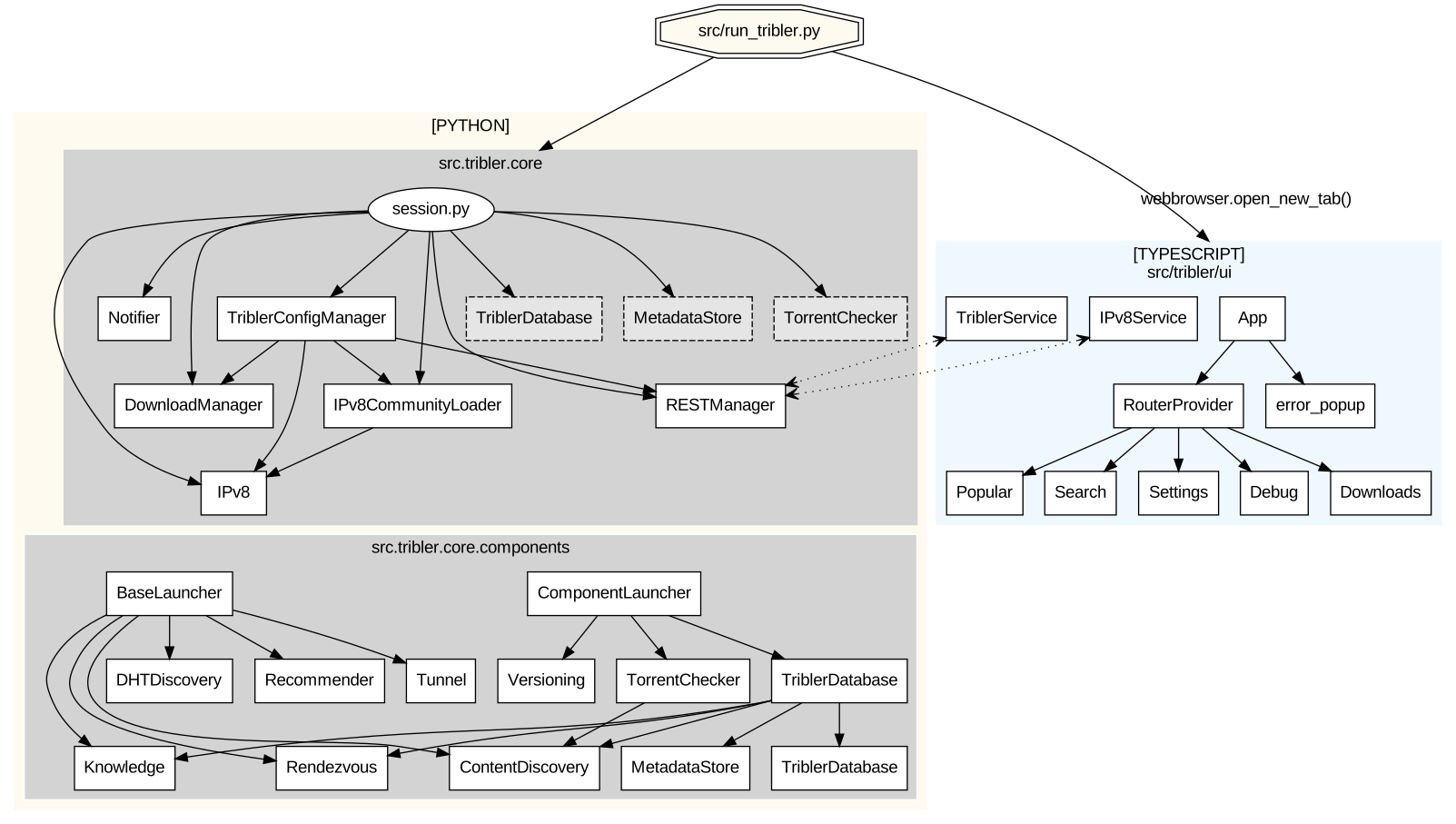
An overview of the most important functional components of Tribler is given in the following graph. We will provide a short description of each of these components.
Session
The Session object (in session.py) manages the core managers of Tribler:
The
Notifierallows components to publish and subscribe to events. In some special cases, this is preferred over class inheritance or composition. Architectural spaghetti can sometimes be avoided by usingNotifierevents.The
TriblerConfigManagermanages writing to and reading from user configuration files. This class manages defaults and the regeneration of (partially) missing configurations.The
DownloadManagerallows management of torrent downloads. Functionality involves fetching torrent meta information, adding and removing downloads, and changing their anonymity level.The
RESTManagersets up a REST API. The API is used by Tribler’s GUI, but can also be used programmatically by users in “headless” mode.IPv8is used to manage peer-to-peer network overlays. All peer-to-peer traffic is handled byIPv8with the exception of non-anonymized torrent downloads. Functionality involves decentralized search and sharing popular torrents.The
IPv8CommunityLoaderis used to launch all optional parts of Tribler. This includes launchingIPv8overlays and registering REST API endpoints.
The TriblerDatabase, MetadataStore and the TorrentChecker are optionally available through the Session.
If requested, they are launched through the IPv8CommunityLoader.
Components
The optional components of Tribler are given in components.py.
They can be divided into two groups: those that require a network overlay (inheriting from ComponentLauncher) and those that do not (inheriting from ComponentLauncher).
Furthermore, the components can have complex relationships, like only launching after other components.
The following list contains a high-level description of the components:
The
DatabaseComponentis responsible for the two main databases. The first is theMetadataStore, which stores all torrent and torrent tracker meta data and “health” (seeders and leechers). The second is theTriblerDatabase, which stores torrent tags.The
TorrentCheckerComponentis responsible for retrieving the “health” information of torrents and trackers. This component may contact trackers for random torrents to determine whether they are reachable. The component also periodically updates the health information for known torrents based on tracker and DHT information.The
VersioningComponentis responsible for Tribler version management. Functionality includes upgrading data from local old Tribler versions to new Tribler versions and determining whether a new Tribler version has been published online.The
TunnelComponentallows for anonymization of torrent downloads. This component manages routing downloads over Tor-like circuits, including circuit construction and destruction.The
DHTDiscoveryComponentallowsIPv8to decentrally search for overlays and peers with given public keys.The
ContentDiscoveryCommentserves remote user searches and content popularity. Both outgoing and incoming user searches are served through this component.The
KnowledgeComponenthandles extraction and search for torrent tags.The
RendezvousComponentkeeps track of peers that have been connected to in the past. This is an experimental component that aims to serve as a source of decentral reputation.The
RecommenderComponentkeeps track of local user searches and the preferred download for the search query. This is an experimental component that aims to serve as a source for Artificial Intelligence based personalized recommendations.
Web UI
The Web UI serves to view and control the state of the Tribler process. Essentially, the Web UI uses three main classes:
The
IPv8Servicebinds to the REST API of theIPv8component in the Tribler process.The
TriblerServicebinds to the REST API of anything that is not in theIPv8service.The
Appis the React application entrypoint.
The App contains a component to route information, the RouterProvider, and a means to report errors that have been sent from the Tribler process.
The architecture closely resembles the information in the GUI.
Essentially, the RouterProvider mirrors the visible pages:
src/pages/Debugqueries the Tribler process for debug information.src/pages/Downloadsincludes components to render torrent downloads.src/pages/Popularqueries for popular torrents.src/pages/Searchmanages pending searches, combining local and remote results.src/pages/Settingsreads and writes the Tribler configuration (through the REST API).